


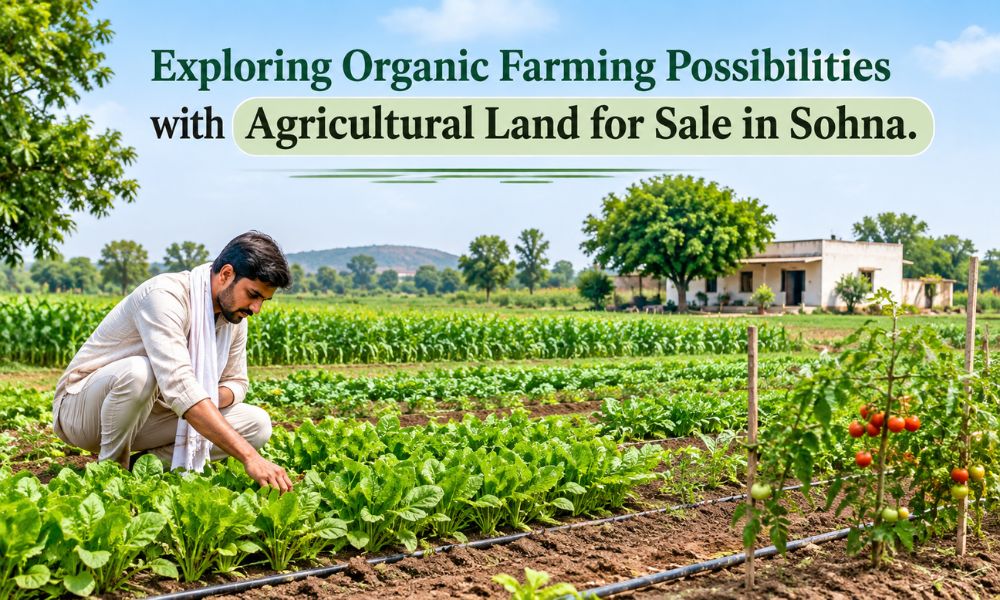
Organic farming is becoming an important part of modern agriculture as more people recognise the value of naturally grown food and environmentally responsible farming practices. With increasing awareness about soil health, chemical-free produce, and sustainable agriculture, many farmers and investors are exploring opportunities in organic farming. Choosing the right agricultural land is the first step towards building a successful farming operation.
Sohna, located in the Gurugram district of Haryana, offers interesting possibilities for people looking to explore agricultural activities. Its developing surroundings, rural landscape, and connectivity to major parts of Gurugram make it an area worth considering for agricultural land investment. For those interested in exploring Agricultural Land for Sale in Sohna, understanding the potential of organic farming can help them make a more informed property decision.
Why Organic Farming Is Gaining Attention
Organic farming focuses on growing crops through natural methods while reducing dependence on synthetic fertilisers, pesticides, and other chemical inputs. It involves practices such as composting, crop rotation, natural pest management, and maintaining healthy soil.
The growing demand for organic food has encouraged farmers to consider alternative cultivation methods. Many consumers now pay attention to how their food is produced and prefer vegetables, fruits, and grains grown using responsible agricultural practices.
For landowners, organic farming can provide an opportunity to develop productive agricultural land while supporting environmental sustainability. However, successful organic cultivation requires proper planning, suitable soil conditions, water availability, and consistent farm management.
Why Sohna Can Be Considered for Organic Farming
Sohna is known for its rural surroundings and agricultural landscape. While the region is also experiencing residential, commercial, and infrastructure development, agricultural activities continue to be relevant in its surrounding villages.
People exploring agricultural opportunities can consider Sohna for several reasons:
1. Agricultural Surroundings
Several parts of Sohna have an established agricultural environment. This can be useful for buyers who want to understand local cultivation practices, nearby farming activities, and the availability of agricultural resources before purchasing land.
2. Connectivity to Gurugram and Delhi NCR
Sohna has road connectivity with Gurugram and other parts of Delhi NCR. This can be helpful for farm owners who need to transport agricultural produce, arrange supplies, or travel regularly to their farmland.
3. Opportunities for Different Crops
Depending on soil quality, water availability, and local climatic conditions, agricultural land in Sohna may support different types of cultivation. Buyers can explore possibilities such as seasonal vegetables, fruits, pulses, and other suitable crops.
4. Scope for Long-Term Agricultural Planning
People interested in developing a farm over several years can evaluate land opportunities in Sohna. A well-planned agricultural property may support different farming activities as the owner’s requirements and cultivation plans evolve.
Organic Farming Ideas to Explore on Agricultural Land
Before purchasing agricultural property, it is helpful to understand what type of farming activity you want to develop. Organic farming is not limited to growing vegetables. There are several possibilities depending on the available land area and resources.
1. Organic Vegetable Cultivation
Growing vegetables using natural farming practices is one of the options worth exploring. Seasonal vegetables such as tomatoes, spinach, cauliflower, carrots, radishes, and leafy greens can be considered according to the local growing conditions.
Farmers can plan cultivation cycles to produce different vegetables throughout the year. Crop rotation and natural composting can also help maintain soil fertility.
Before selecting vegetables, it is important to understand local demand, seasonal requirements, irrigation facilities, and the expected cost of cultivation.
2. Fruit Farming and Small Orchards
Fruit cultivation can be another option for people with a long-term agricultural vision. Depending on soil conditions, water availability, and climate suitability, farmers may explore fruits such as guava, pomegranate, lemon, and amla.
Unlike seasonal vegetables, fruit trees generally require more time to establish and begin producing commercially useful harvests. Proper spacing, pruning, irrigation, and pest management are important for maintaining healthy plants.
A small orchard can also be developed alongside vegetable cultivation, provided the land has suitable conditions.
3. Organic Farming with Crop Rotation
Growing the same crop repeatedly can affect soil nutrients and increase the risk of certain pests and diseases. Crop rotation helps address these challenges by changing the crops grown in different seasons.
For example, farmers may plan a combination of vegetables, pulses, and other suitable crops depending on seasonal conditions. Including leguminous crops can also support soil health through natural nitrogen fixation.
This approach can make farmland more productive while reducing dependence on certain chemical inputs.
4. Composting and Natural Soil Management
Healthy soil is essential for organic farming. Instead of relying heavily on synthetic fertilisers, farmers can explore natural soil improvement methods.
Composting agricultural waste, using well-decomposed farmyard manure, adding organic matter, and growing green manure crops are some commonly used practices.
These methods help improve soil structure, support beneficial microorganisms, and contribute to better moisture retention. Regular soil testing is also useful for understanding nutrient requirements.
5. Integrated Farming Opportunities
Integrated farming combines different agricultural activities on the same property. Depending on the land size and applicable regulations, farmers may consider combining crop cultivation with activities such as beekeeping, poultry, or dairy farming.
The advantage of this approach is that different activities can support one another. For example, certain agricultural by-products may be reused as composting materials, while multiple farming activities can create additional sources of income.
However, each activity requires proper infrastructure, investment, management, and compliance with relevant regulations.
Important Factors to Check Before Buying Agricultural Land in Sohna
Selecting suitable land is one of the most important decisions when planning an organic farm. A property may look attractive, but its actual agricultural usefulness depends on several practical factors.
Here are some points buyers should evaluate before making a decision:
- Soil Quality: Check soil texture, fertility, drainage, and pH levels. Soil testing can help determine which crops are suitable for the property.
- Water Availability: Organic cultivation still requires a reliable water source. Understand the availability of groundwater, irrigation facilities, and any applicable restrictions on water extraction.
- Land Size and Layout: Consider whether the available area is sufficient for your proposed farming activities. The shape and accessibility of the plot can also influence farm planning.
- Road Accessibility: Proper road access makes it easier to transport seeds, equipment, fertilisers, and harvested produce.
- Electricity and Infrastructure: Check the availability of electricity, irrigation connections, storage options, and other facilities required for agricultural operations.
- Legal Verification: Carefully verify ownership documents, revenue records, land classification, access rights, and any existing restrictions. Also check the applicable rules before planning construction, commercial activities, or changes in land use.
Taking professional guidance during property verification can help reduce the chances of unexpected complications.
Understanding the Investment Potential of Agricultural Land
Agricultural land should be evaluated according to its location, legal status, soil conditions, accessibility, water resources, and intended use. Its value can vary considerably from one village or location to another within Sohna.
For buyers interested in organic farming, the primary consideration should be whether the land can support their intended agricultural activities. Factors such as development costs, irrigation arrangements, labour availability, crop selection, and access to potential markets should also be included in the investment plan.
It is equally important to understand that organic farming takes time. Improving soil quality, establishing crops, obtaining organic certification where required, and building a reliable customer base may involve a gradual process.
Rather than expecting immediate returns, buyers should approach agricultural investment with realistic expectations and a clear long-term plan.
Finding Suitable Agricultural Property with the Right Guidance
Searching for agricultural property involves more than comparing land prices and locations. Buyers need to understand the property’s documentation, physical condition, accessibility, and suitability for their intended purpose.
Green Space Properties & Developers assists buyers exploring property opportunities in Sohna and the surrounding Gurugram region. Whether someone is looking for agricultural land for farming purposes or evaluating a property for long-term investment, understanding the available options is an important part of the buying process.
Having clear information about land details, location, ownership records, and applicable usage permissions can make property selection more organised and informed.
Final Thoughts
Organic farming offers an opportunity to combine agricultural productivity with responsible land management. From growing seasonal vegetables and developing fruit orchards to practising crop rotation and integrated farming, there are several possibilities for people interested in agricultural activities.
Sohna is an area worth exploring for buyers considering farmland in the Gurugram region. However, choosing the right property requires careful attention to soil conditions, water availability, road access, legal documentation, and farming requirements.
Anyone exploring agricultural land should first define their farming goals and evaluate properties accordingly. With proper research, realistic planning, and suitable land selection, an agricultural property can become the foundation for a well-managed and sustainable farming project.
Related: A Buyer’s Guide to Agricultural Land for Sale in Sohna


Comments are closed